Tuscarawas County 2026 located in the heart of Ohio, has a robust judicial system that handles a variety of case types. Whether you are a resident, business owner, or someone dealing with legal matters in the county, understanding the different types of cases can help you navigate the legal system efficiently. This guide will provide detailed insights into Tuscarawas County case types, processes, and resources available for each.
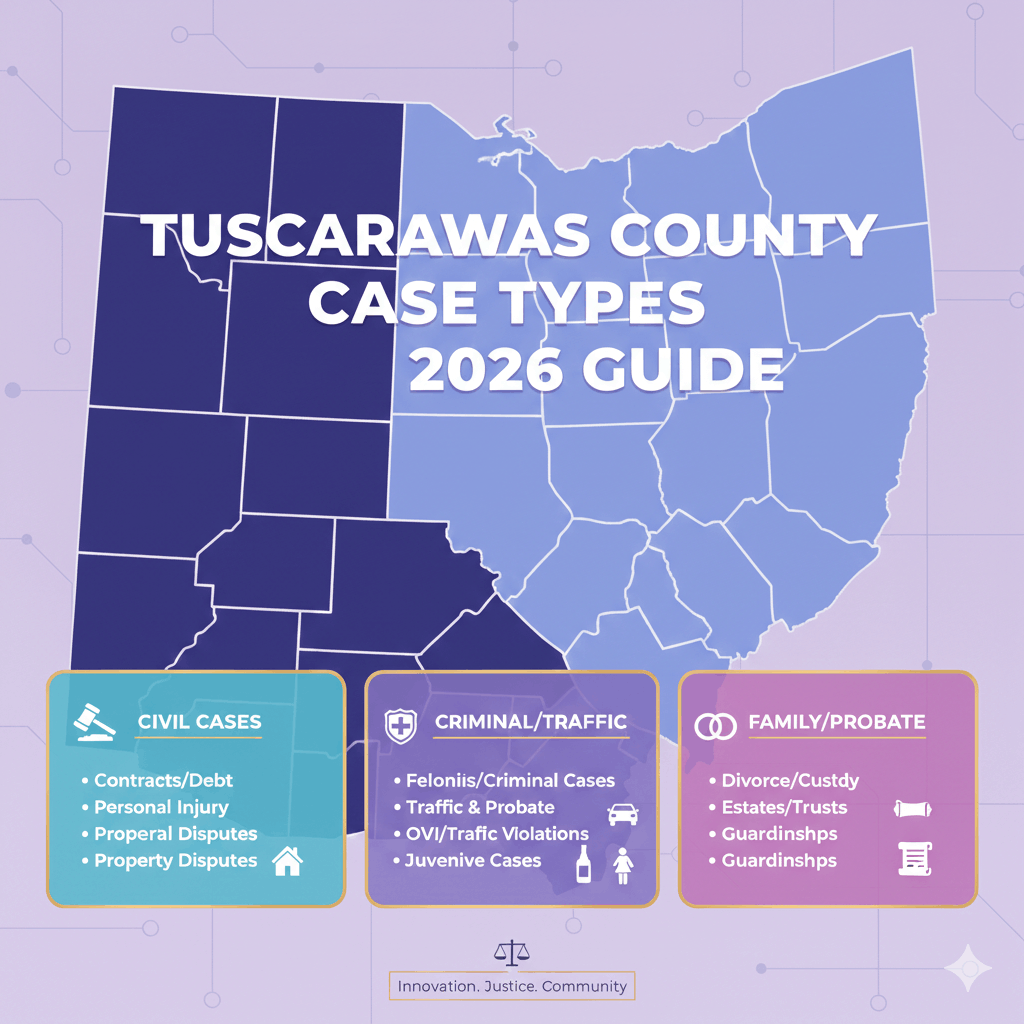
1. Civil Cases
Civil cases in Tuscarawas County involve disputes between individuals, businesses, or organizations where no criminal charges are involved. Common civil cases include:
- Contract Disputes: Disagreements arising from broken agreements or failure to meet contractual obligations.
- Property Disputes: Conflicts over land ownership, boundaries, or property damage.
- Personal Injury Claims: Lawsuits seeking compensation for injuries caused by accidents or negligence.
- Small Claims: These are minor financial disputes, usually involving amounts under a certain limit, handled more quickly and with simplified procedures.
Civil cases are primarily filed in the Tuscarawas County Court of Common Pleas, where parties may settle disputes through negotiation, mediation, or trial.
2. Criminal Cases
Criminal cases involve actions that are considered offenses against the state or public. The Tuscarawas County prosecuting attorney handles these cases, which range from misdemeanors to felonies. Common criminal cases include:
- Theft and Burglary: Property crimes, including shoplifting, burglary, and larceny.
- Drug Offenses: Possession, distribution, or manufacturing of controlled substances.
- Assault and Domestic Violence: Physical harm or threats to another person, including family-related cases.
- Traffic Offenses: DUI, reckless driving, or other traffic-related violations.
Criminal cases often proceed through arraignment, pre-trial hearings, and trial. Penalties can include fines, probation, community service, or incarceration.
3. Family Court Cases
Tuscarawas County Family Court deals with matters related to family and domestic issues. The goal is to protect the well-being of family members, especially children. Case types include:
- Divorce and Annulment: Legal termination of marriage or annulment of marriage based on specific legal grounds.
- Child Custody and Visitation: Determining parental rights and visitation schedules.
- Child Support and Spousal Support: Establishing financial responsibilities for children or former spouses.
- Adoption and Guardianship: Legal processes to adopt a child or appoint a guardian.
Family court cases often involve mediation to help families reach agreements without lengthy trials.
4. Probate Cases
Probate cases in Tuscarawas County deal with matters related to estates, wills, and trusts. The ProbateCourt ensures that assets are distributed according to legal requirements and the decedent’s wishes. Typical probate cases include:
- Wills and Estate Administration: Validating wills and managing estate distribution.
- Trusts and Guardianships: Establishing trusts or appointing guardians for minors or incapacitated adults.
- Mental Health Matters: Court-supervised treatment or commitment for individuals with mental health concerns.
The Probate Court works closely with executors, trustees, and family members to ensure fair and legal management of estates.
5. Juvenile Cases
The Juvenile Court in Tuscarawas County focuses on cases involving minors, aiming for rehabilitation rather than punishment. Juvenile cases include:
- Delinquency Cases: Crimes committed by minors, including theft, assault, or vandalism.
- Status Offenses: Non-criminal behavior specific to minors, such as truancy or curfew violations.
- Child Protection Cases: Abuse, neglect, or dependency cases where children’s welfare is at risk.
Juvenile cases often involve counseling, community service, or placement in juvenile programs rather than incarceration.
6. Traffic and Municipal Cases
Traffic violations and other minor offenses are usually handled by local municipal courts in Tuscarawas County. Case types include:
- Moving Violations: Speeding, running red lights, or unsafe driving.
- Parking Violations: Tickets issued for illegal parking or expired meters.
- Local Ordinance Violations: Violations of city or township regulations.
These cases are generally resolved quickly and may involve fines, traffic school, or minor penalties.
How to Access Tuscarawas County Case Information
Tuscarawas County provides several resources for residents to access case information:
- Online Court Records: Many cases can be searched online through the Tuscarawas County Clerk of Courts website.
- Clerk’s Office: Residents can visit the courthouse to request case documents or obtain copies.
- Legal Assistance: Hiring a local attorney can help guide individuals through complex cases and procedures.
Tips for Navigating Tuscarawas County Cases
- Know Your Court: Identify whether your case falls under Common Pleas, Municipal, Probate, Family, or Juvenile Court.
- Meet Deadlines: Courts strictly enforce filing deadlines and response dates. Missing deadlines can affect your case.
- Gather Documentation: Proper evidence and documentation are critical for successful outcomes.
- Consider Mediation: Many civil and family disputes can be resolved outside of court through mediation, saving time and cost.
- Stay Informed: Check court websites regularly for updates on your case status.
Conclusion
Tuscarawas County’s judicial system handles a wide range of case types, including civil, criminal, family, probate, juvenile, and traffic cases. Understanding the nature of your case, the court system, and available resources is crucial for a smooth legal process. By staying informed, meeting deadlines, and seeking professional legal guidance when necessary, residents can navigate the Tuscarawas County courts efficiently and effectively.
Frequently Asked Questions (FAQs)
1. How do I file a civil case in Tuscarawas County
You can file a civil case at the Tuscarawas County Court of Common Pleas. Required forms and instructions are available online or at the clerk’s office.
2. Can I check my criminal case online
Yes, many criminal case records are available through the Tuscarawas County Clerk of Courts website.
3. What is the difference between probate and civil cases
Probate cases deal with estates, wills, and guardianships, while civil cases involve disputes between individuals or businesses.
4. How are juvenile cases handled differently
Juvenile cases focus on rehabilitation and may involve counseling, community service, or special programs rather than traditional criminal penalties.
5. Where can I get legal assistance in Tuscarawas County
You can hire a local attorney or contact legal aid organizations for guidance on civil, family, or criminal cases.6. Are there fees for accessing court records?
Yes, small fees may apply for printing or obtaining copies of case documents. Online access may sometimes be free for basic information.